
You don’t need more books to impress people on social media. You need books that shift how you think, act, and show up—especially in a year like 2026, when attention is scarce, pressure is high, and clarity is currency. What you need is a list of books to read in 2026 around you this year.
This guide cuts through the hype. Instead of listing “top 10” titles with vague praise, we break down 15 powerful books—10 modern self-help standouts and 5 timeless classics—with exactly what each one gives you, who it’s truly for, and how to get the most out of it.
Read one. Apply it. Watch your results change.
Self Help Books –10 Best Books To Read in 2026
Here are the list of self help books to read in 2026. These books aren’t about motivation—they’re about mechanisms. Each one gives you a system to fix a specific problem: distraction, indecision, self-doubt, or wasted effort.
1. Atomic Habits
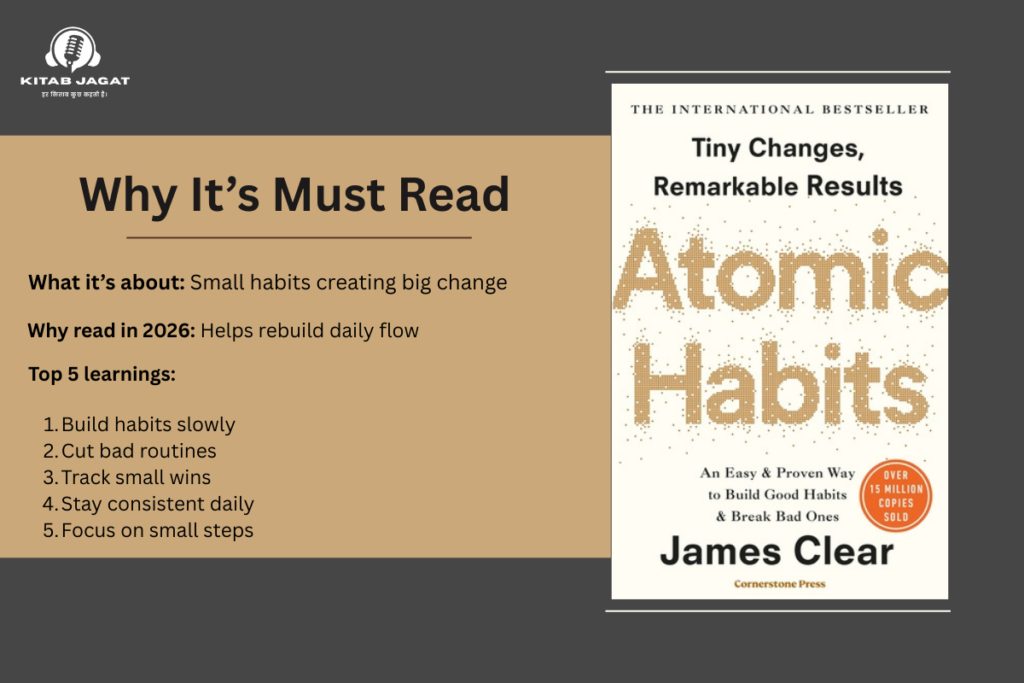
Author: James Clear
What it’s about: How small, consistent actions—often as small as 1% improvements—compound into massive personal and professional transformation over time. It’s not about goals; it’s about building identity-based systems that make success automatic.
Why you should read it: Most people fail not because they lack ambition, but because they rely on willpower instead of design. This book shows you how to engineer your environment so good habits happen effortlessly.
Who should read it: Anyone who’s ever started a habit and quit within two weeks—entrepreneurs, students, team leaders, creatives, parents—really, anyone with a routine.
What you’ll learn:
- The 4 Laws of Behavior Change (Cue, Craving, Response, Reward)
- How to use “habit stacking” to attach new behaviors to existing ones
- Why focusing on systems beats chasing outcomes
- How to make bad habits invisible, unattractive, difficult, and unsatisfying
How to read it: Don’t rush. Read one chapter, then pick one tiny change to implement before moving on. Keep the “Habit Scorecard” exercise handy—it’s a game-changer.
Best time to read it: Early January (for annual resets), after a major life change, or any time you feel stuck in a cycle of inconsistency.
2. Start With Why
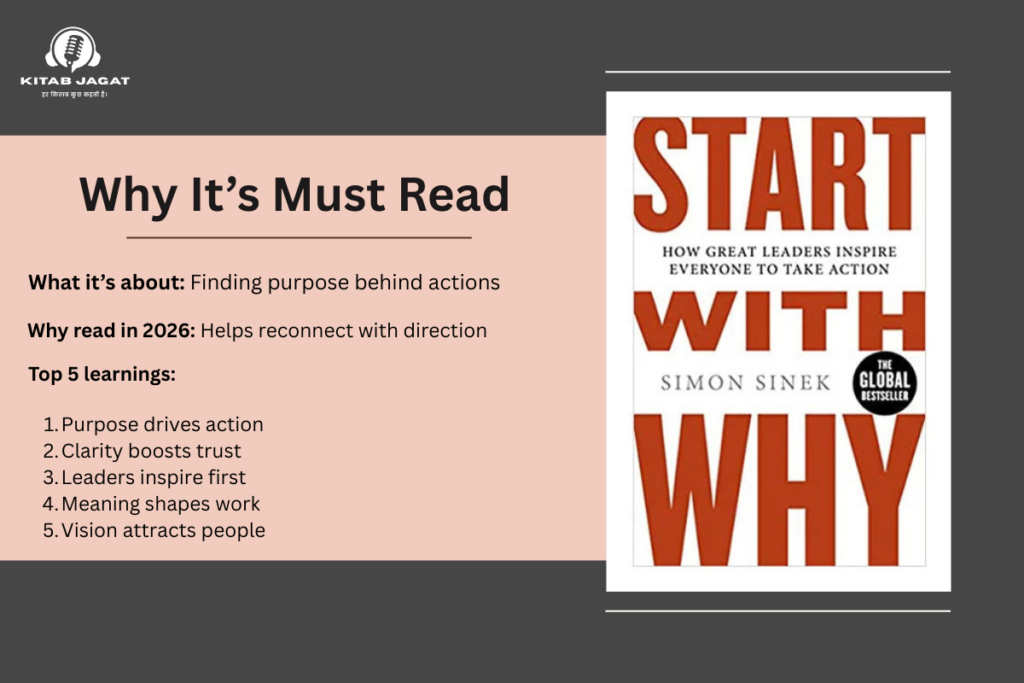
Author: Simon Sinek
What it’s about: Great leaders and organizations don’t lead with what they do—they lead with why they do it. This book introduces the “Golden Circle” (Why → How → What) to explain why some brands inspire loyalty while others struggle to be noticed.
Why you should read it: In a world full of noise, people don’t buy what you do—they buy why you do it. Whether you’re selling a product, leading a team, or building a personal brand, clarity of purpose is your unfair advantage.
Who should read it: Founders, marketers, managers, coaches, or anyone trying to influence others without relying on price or pressure.
What you’ll learn:
- How Apple, Martin Luther King Jr., and the Wright brothers inspired action without ads or authority
- Why manipulation (discounts, fear, peer pressure) works short-term but fails long-term
- How to articulate your own “Why” in a way that resonates emotionally
How to read it: Pay special attention to the biology section (limbic brain vs. neocortex)—it explains why “Why” works on a neurological level. Try writing your own Golden Circle after Chapter 3.
Best time to read it: When launching a new project, rebranding, or feeling disconnected from your mission.
3. What Got You Here Won’t Get You There
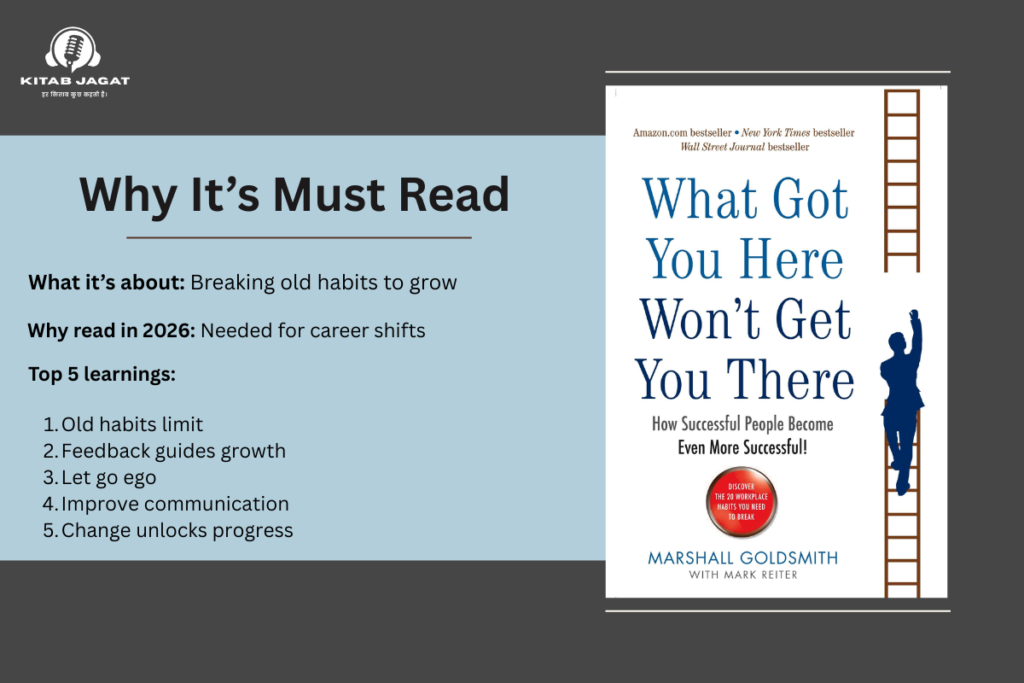
Author: Marshall Goldsmith
What it’s about: What got you here, won’t get you there is the books about behaviors that helped you succeed early in your career—like winning debates, adding your opinion, or proving you’re right—become liabilities once you reach leadership. This book identifies 20 “fatal flaws” that sabotage high-performers.
Why you should read it: Success can blind you to your blind spots. This book is a mirror for anyone who’s been told, “You’re great—but hard to work with.”
Who should read it: Mid-career professionals, executives, technical experts moving into leadership, or anyone receiving feedback like “You dominate meetings” or “You don’t listen.”
What you’ll learn:
- How to ask for (and act on) feedback without defensiveness
- Why “adding value” to others’ ideas often demotivates them
- The power of feeding forward instead of dwelling on the past
How to read it: Read it like a diagnostic tool. After each chapter, ask: “Do I do this?” Be brutally honest. Consider pairing it with a trusted peer for accountability.
Best time to read it: After a promotion, during performance review season, or when you feel your team isn’t following your lead.
4. Tough Times Never Last, But Tough People Do
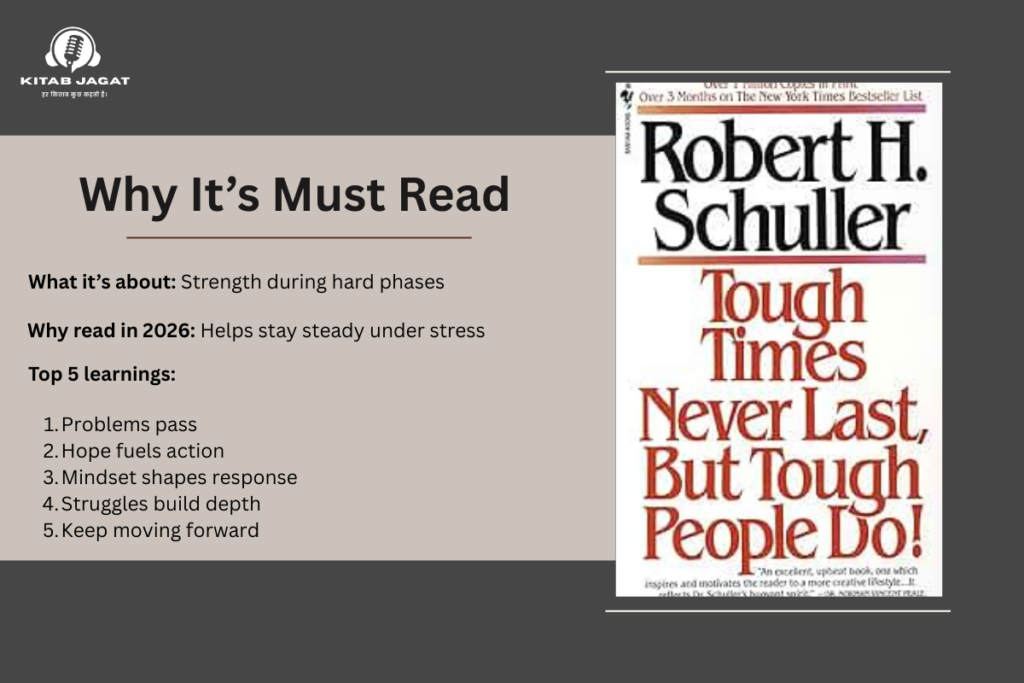
Author: Robert H. Schuller
What it’s about: A no-nonsense guide to building mental resilience using faith, attitude, and action—not toxic positivity. It teaches you how to reframe setbacks as setups for comebacks.
Why you should read it: When layoffs, market shifts, or personal crises hit, optimism alone won’t save you. This book gives you practical mental tools to stay grounded and move forward.
Who should read it: Anyone facing job loss, business uncertainty, health issues, or emotional fatigue—especially those who find “just stay positive” advice unhelpful.
What you’ll learn:
- How to separate your identity from your circumstances
- Why “possibility thinking” beats problem-focused rumination
- Simple daily practices to rebuild confidence after failure
How to read it: Keep it on your nightstand. Read one short chapter each morning to set your mindset before the day begins.
Best time to read it: During economic uncertainty, personal transitions, or whenever you feel like giving up.
5. Don’t Sweat the Small Stuff… and It’s All Small Stuff
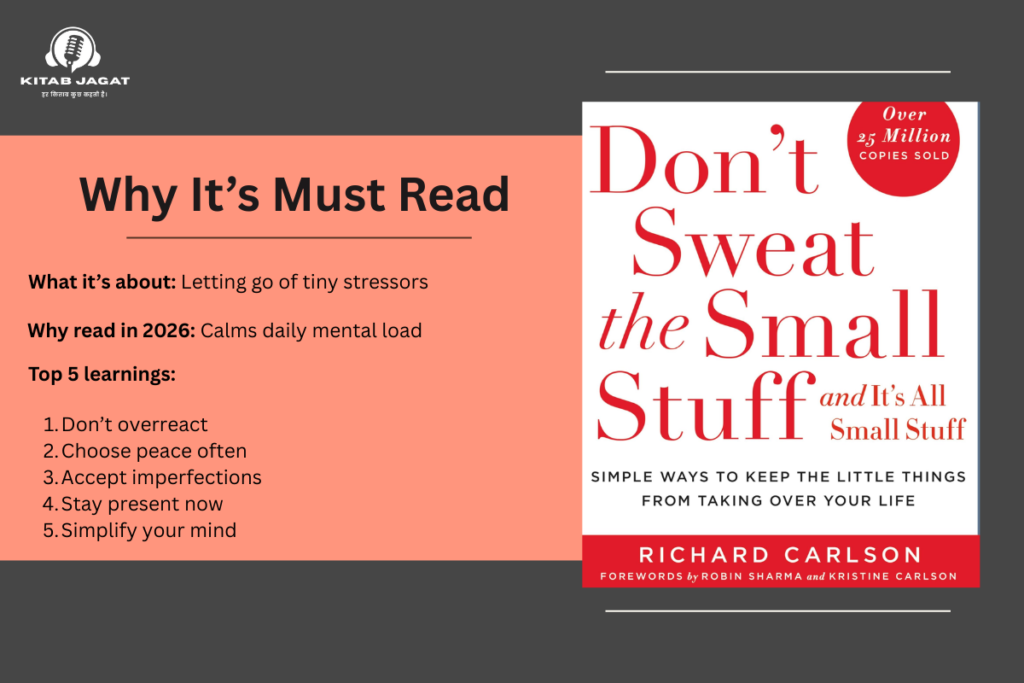
Author: Richard Carlson
What it’s about: A collection of 100 gentle reminders to stop overreacting, overthinking, and over-controlling life’s minor frustrations. It’s about choosing peace over being right.
Why you should read it: Chronic stress isn’t caused by big crises—it’s built from thousands of tiny irritations you react to. This book helps you conserve emotional energy for what truly matters.
Who should read it: Perfectionists, overthinkers, caregivers, and anyone who feels “on edge” most days.
What you’ll learn:
- How to let go of the need to control outcomes
- Why being kind is more important than being correct
- Simple techniques to pause before reacting (like the “10-year rule”)
How to read it: Don’t read it cover to cover. Pick one tip per day. Tape your favorite quotes to your mirror or dashboard. Also, you can quickly listen the audio book summary of this book from our channel. Click the here to listen.
Best time to read it: During high-stress seasons—tax time, holidays, startup launches, or parenting teenagers.
6. The 80/20 Principle
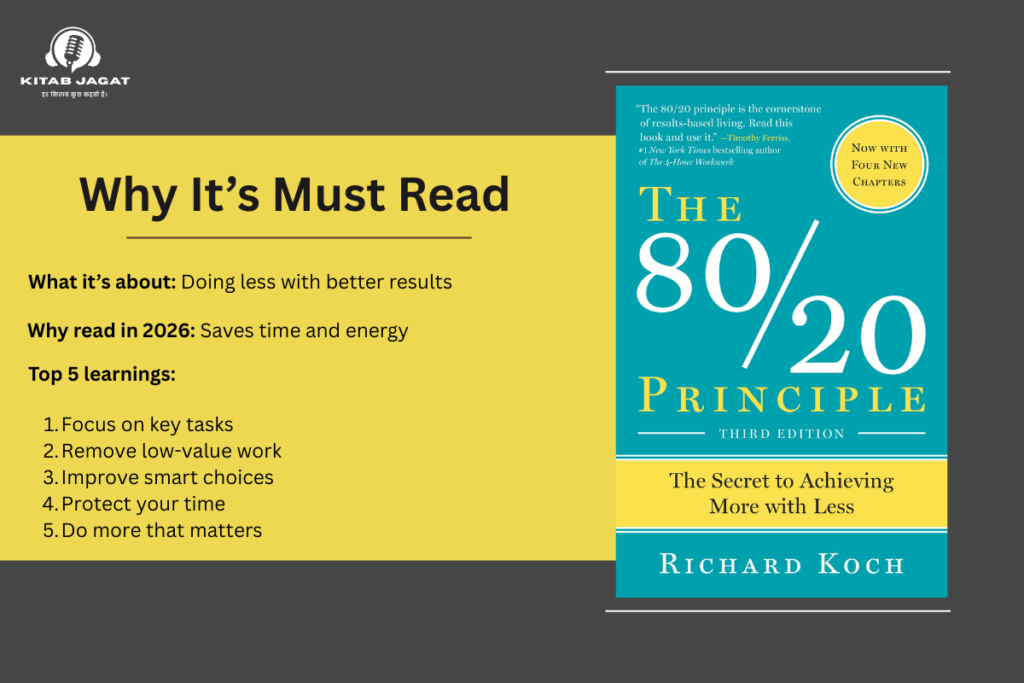
Author: Richard Koch
What it’s about: The idea that 80% of results come from 20% of causes—and how to apply this rule to time, money, relationships, and business to work less and achieve more.
Why you should read it: Most people are busy, not productive. This book shows you how to cut the noise and double down on what actually moves the needle.
Who should read it: Entrepreneurs, freelancers, managers, and anyone feeling overwhelmed by tasks that don’t lead to results.
What you’ll learn:
- How to identify your “vital few” clients, activities, or habits
- Why doing less can increase your income and happiness
- How to apply 80/20 to email, meetings, investments, and even friendships
How to read it: After each chapter, audit one area of your life (e.g., your to-do list) using the 80/20 lens. Eliminate, delegate, or automate the bottom 80%.
Best time to read it: When you’re exhausted but feel like you’ve accomplished nothing—usually Q4 or post-vacation.
7. Don’t Believe Everything You Think
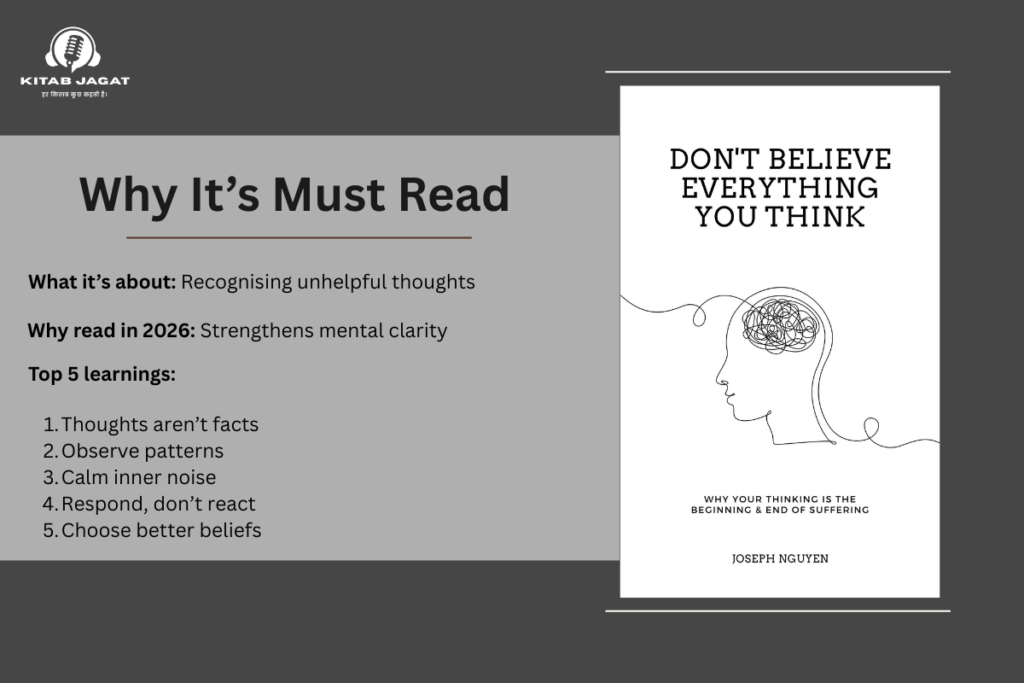
Author: Joseph Nguyen
What it’s about: A practical guide to questioning your inner narrative. It shows how your thoughts are not facts—and how believing them blindly leads to anxiety, conflict, and poor decisions.
Why you should read it: Your mind lies to you daily (“I’m not ready,” “They don’t like me,” “This will never work”). This book teaches you to interrogate your thoughts before they hijack your actions.
Who should read it: Overthinkers, people with anxiety, leaders making high-stakes calls, or anyone stuck in self-doubt loops.
What you’ll learn:
- How to spot cognitive distortions (like catastrophizing or mind-reading)
- The difference between observation and interpretation
- How to respond to thoughts instead of reacting to them
How to read it: Keep a “thought journal.” For every triggering situation, write down what you thought—and ask: “Is this true? Is it helpful?”
Best time to read it: During periods of high stress, decision fatigue, or after receiving unexpected criticism.
8. The Courage to Be Disliked
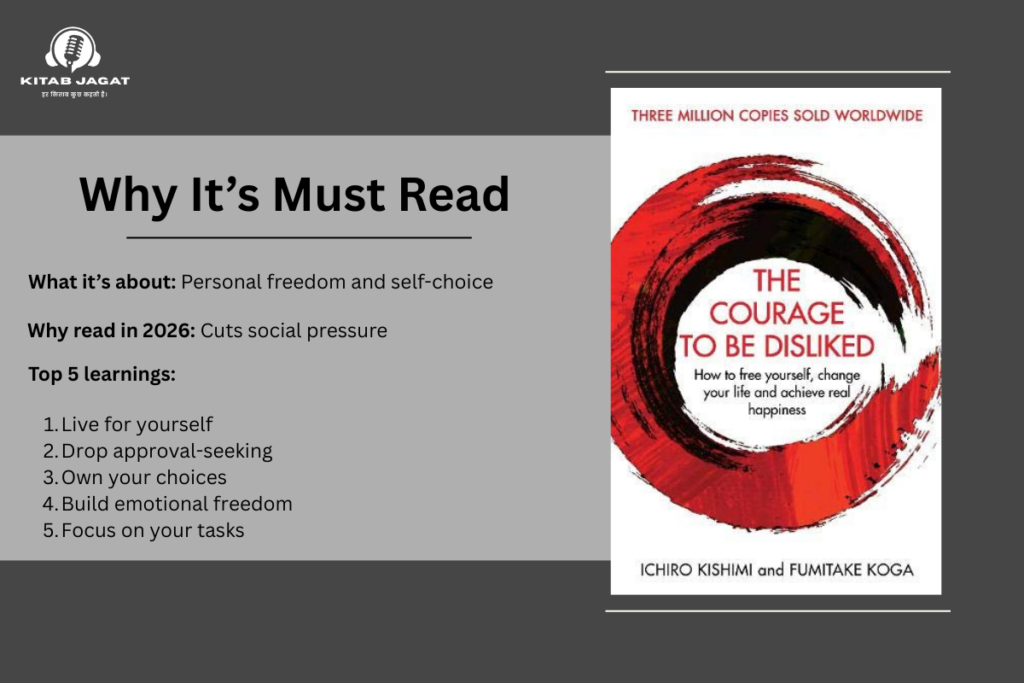
Author: Ichiro Kishimi and Fumitake Koga
What it’s about: A dialogue-style book based on Adlerian psychology that argues your past doesn’t determine your future—your choices do. Freedom comes from stopping the pursuit of others’ approval.
Why you should read it: If you’re exhausted from trying to please everyone, this book is liberation in print. It shows that you’re not trapped by your history—you’re free to redefine yourself today.
Who should read it: People-pleasers, those healing from trauma, creative professionals afraid of judgment, or anyone feeling “stuck” in old roles.
What you’ll learn:
- How all problems are interpersonal—and solvable through changed perspective
- Why seeking validation keeps you dependent
- The concept of “task separation”: your job ends where another’s begins
How to read it: Read it slowly. The dialogue format invites reflection. Pause after each conversation to ask: “Where am I seeking approval unnecessarily?”
Best time to read it: After a breakup, career shift, or when you feel invisible in your own life.
9. The Mountain is You
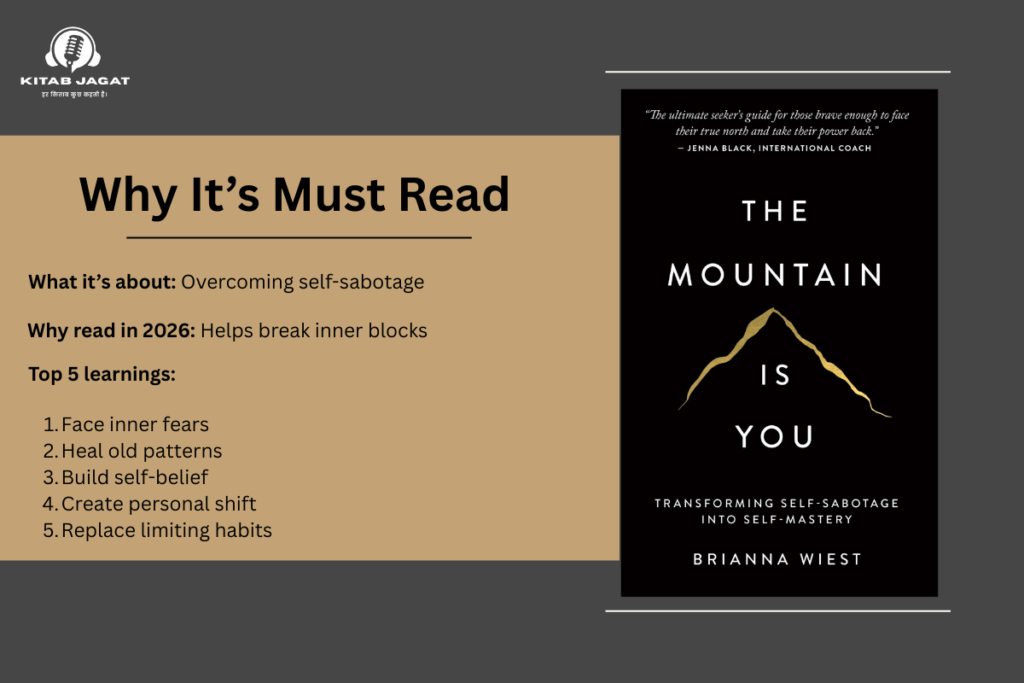
Author: Brianna Wiest
What it’s about: Self-sabotage isn’t a character flaw—it’s a pattern. This book helps you identify your inner obstacles (fear of success, emotional avoidance, perfectionism) and transform them into fuel.
Why you should read it: You’re not failing because opportunities are missing. You’re failing because you’re the mountain in your own way. This book helps you become your own guide, not your own barrier.
Who should read it: High-achievers who self-destruct at the finish line, creatives with unfinished projects, or anyone repeating the same mistakes.
What you’ll learn:
- How emotional self-regulation precedes success
- Why you attract the same toxic dynamics until you change your energy
- How to turn pain into purpose through conscious choice
How to read it: Read with a journal. After each section, write: “What mountain am I carrying? How can I climb it—or become it?”
Best time to read it: When you’re close to a breakthrough but keep pulling back.
10. Digital Minimalism
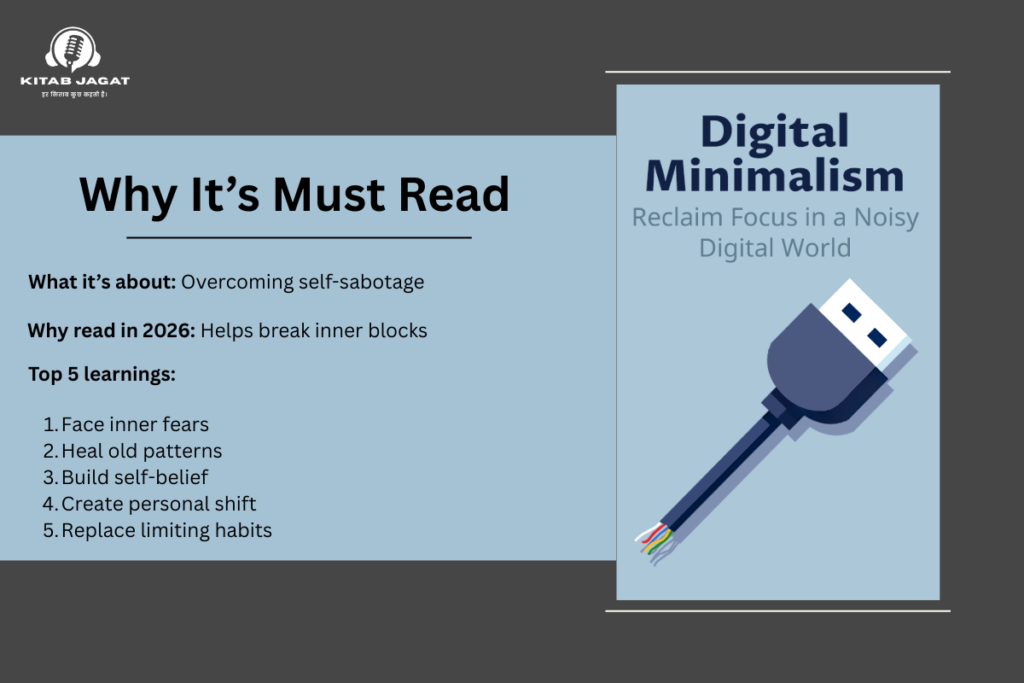
Author: Cal Newport
What it’s about: A philosophy for using technology intentionally—not compulsively. It’s not anti-tech; it’s pro-human focus.
Why you should read it: Constant scrolling isn’t harmless—it’s eroding your ability to think deeply, connect meaningfully, and produce valuable work. This book gives you a 30-day reset plan to reclaim your attention.
Who should read it: Knowledge workers, students, parents, or anyone who checks their phone within 5 minutes of waking up.
What you’ll learn:
- How to run a “digital declutter”
- Why solitude is essential for creativity
- How to replace passive consumption with high-quality leisure
How to read it:
Read it in parts:
Part 1 thoroughly, then do the 30-day detox outlined in
Part 2. Don’t skip the implementation.
**Best time to read it: January, after a vacation filled with screen overload, or when you notice your focus span shrinking.
Timeless Classic Books – 5 All Time Favorite Books To Read in 2026
These books have survived decades because they speak to unchanging truths about human behavior, money, and purpose. In 2026, they’re more relevant than ever.
1. Ikigai
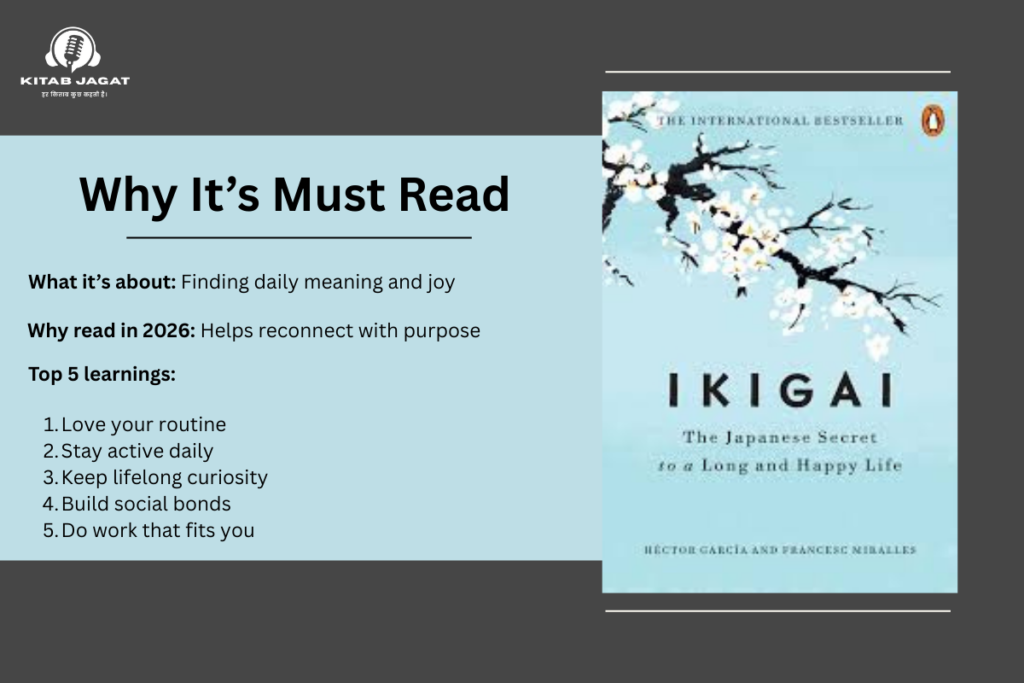
Author: Héctor García and Francesc Miralles
What it’s about: A Japanese concept meaning “a reason for being”—the intersection of what you love, what you’re good at, what the world needs, and what you can be paid for.
Why you should read it: Burnout is rampant because people chase money or passion alone. Ikigai shows you how to build a life that’s both meaningful and sustainable.
Who should read it: Career changers, retirees, side-hustlers, or anyone feeling “meh” about their daily grind.
What you’ll learn:
- Daily rituals of the world’s longest-living people
- How small, consistent joys create long-term fulfillment
- The danger of “hustle culture” vs. the power of flow
How to read it: Fill out the Ikigai diagram early. First you can start with a quick summary of Ikigai to understand what you must focus on while reading the book. Use the book as a lifestyle guide, not just a read.
Best time to read it: During a quarter-life or mid-life reflection, or when you’re choosing your next career move.
2. The 7 Habits of Highly Effective People
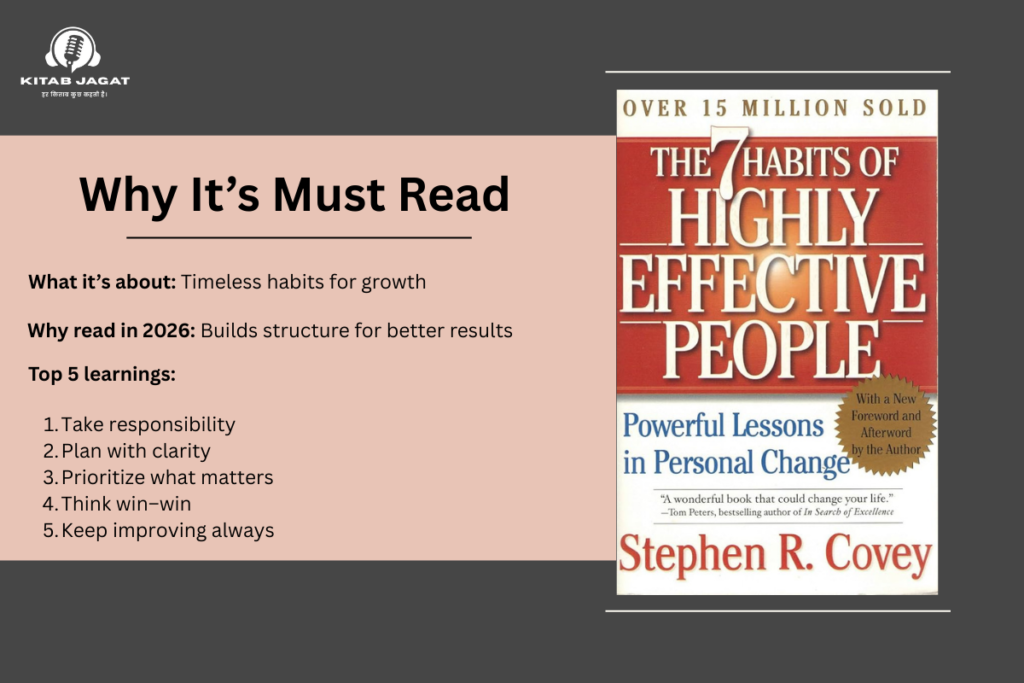
Author: Stephen R. Covey
What it’s about: A principle-centered approach to personal and professional effectiveness based on character ethics, not quick fixes.
Why you should read it: Most productivity advice is tactical. This book is foundational—it rebuilds how you see responsibility, relationships, and results.
Who should read it: Managers, parents, team leads, or anyone tired of surface-level time management hacks.
What you’ll learn:
- The difference between dependence, independence, and interdependence
- How to “seek first to understand, then to be understood”
- Why “sharpening the saw” (self-renewal) is non-negotiable
How to read it: Study one habit per week. Apply it before moving to the next. Re-read it every 2–3 years. Or you can simply listen the Audio book summary of 7 Habits of Highly Effective People, whenever needed.
Best time to read it: When you’re leading others or entering a new phase of responsibility.
3. Rich Dad Poor Dad
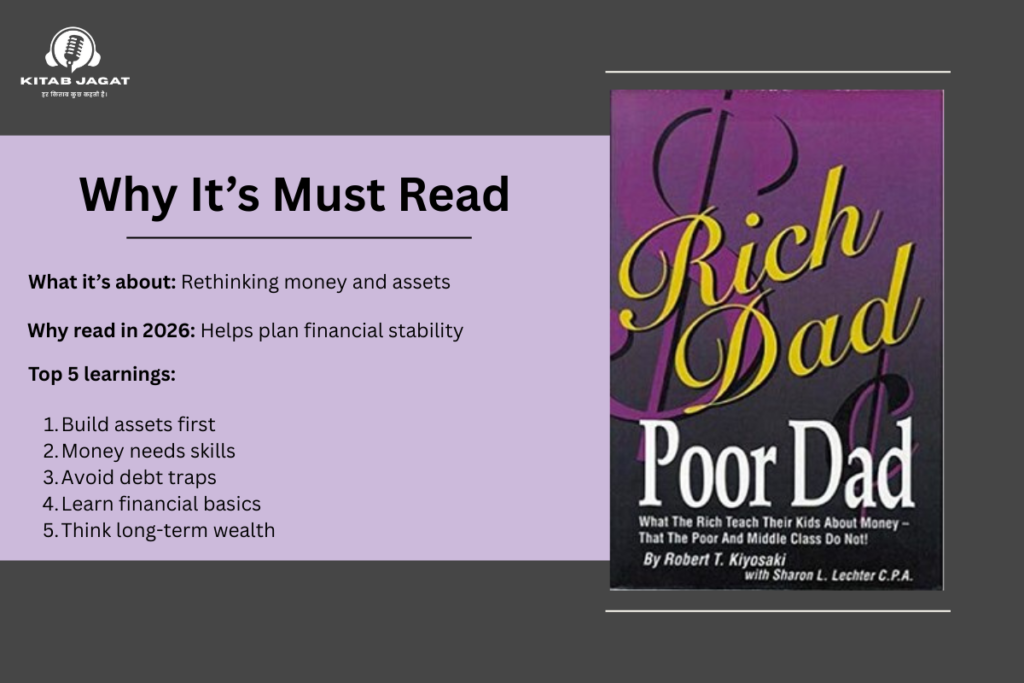
Author: Robert T. Kiyosaki
What it’s about: A contrast between two father figures—one who sees a paycheck as security, the other who builds assets that generate income while he sleeps.
Why you should read it: Schools teach you to work for money. This book teaches you to make money work for you—a mindset shift that changes everything.
Who should read it: Employees dreaming of freedom, young adults starting their financial journey, or anyone confused about assets vs. liabilities.
What you’ll learn:
- Why your home is not an asset (in financial terms)
- The difference between good debt and bad debt
- How financial literacy beats salary growth
How to read it: Don’t take it as literal advice—take it as a mindset trigger. Follow up with real financial education.
Best time to read it: In your 20s or 30s, or the moment you realize your income isn’t leading to freedom.
4. Who Moved My Cheese?
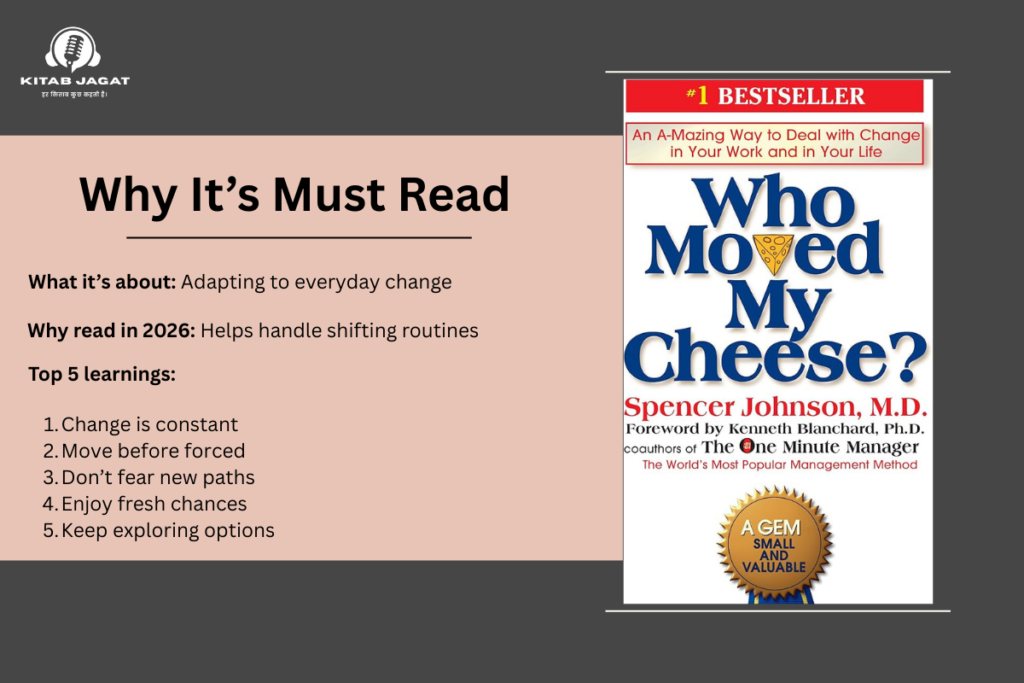
Author: Dr. Spencer Johnson
What it’s about: A parable about four characters in a maze searching for cheese (symbolizing what we want in life)—and how they respond when it disappears.
Why you should read it: Change is inevitable. Your response determines your future. This simple story cuts through denial and fear faster than any seminar.
Who should read it: Teams facing restructuring, entrepreneurs in volatile markets, or anyone resisting change.
What you’ll learn:
- How to “smell the cheese early” (spot change before it’s forced on you)
- Why laughter reduces fear of the unknown
- The power of taking the first step—even without a map
How to read it: Read it in one sitting. Then discuss it with your team or family.
Best time to read it: Right before—or during—a major life or career transition.
15. Think and Grow Rich
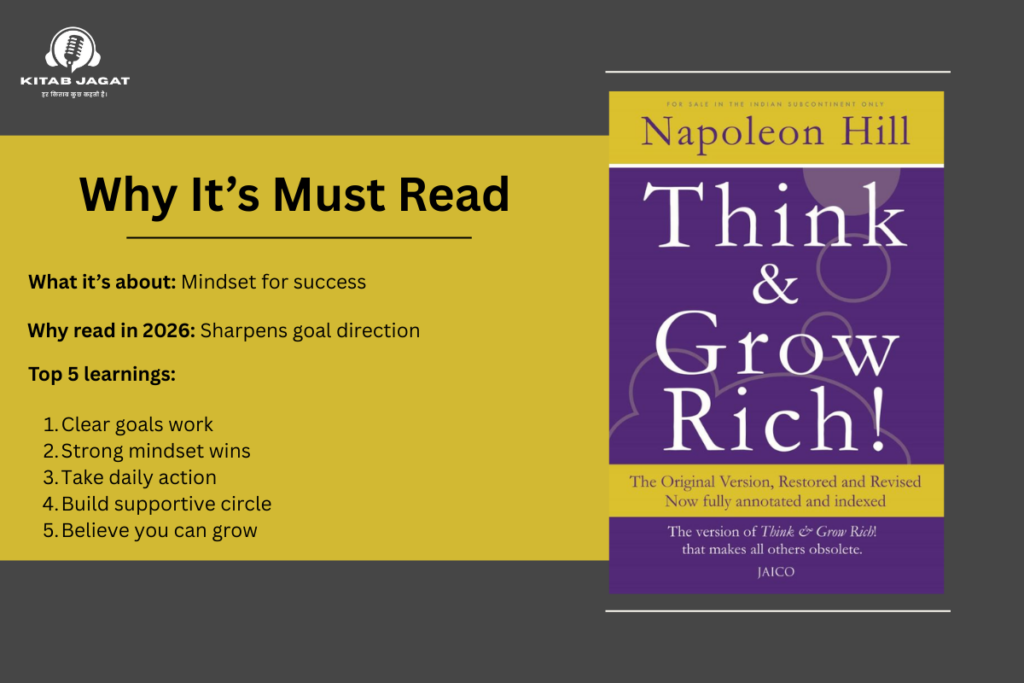
Author: Napoleon Hill
What it’s about: Based on 20+ years of studying self-made millionaires, this book reveals the mental habits behind financial success—starting with burning desire and autosuggestion.
Why you should read it: It’s not about get-rich-quick. It’s about rewiring your subconscious to attract opportunity through focused thought and action.
Who should read it: Ambitious builders, salespeople, inventors, or anyone who’s been told “you’re dreaming too big.”
What you’ll learn:
- The power of a “definite chief aim”
- How to turn setbacks into stepping stones
- Why a mastermind group multiplies your success
How to read it: Read slowly. Apply the 13 principles one by one. Write your own “burning desire” statement.
Best time to read it: When you’re starting a bold new venture or recovering from a major loss.
Final Thought
In 2026, reading is a strategic act—not a passive pastime.
From the list of Best books to read in 2026 above, pick the book that matches your current challenge, not your aspirational identity.
Read it. Apply it. Then pass it on.
Because the best books don’t just sit on your shelf—they reshape your days.